I finally decided that I don't really need a new table for my home office.
At least not now.
I have too much stuff as it is and it's just too much work to try and get IKEA to take my money for a cheap table.
I'll make due, save over $300 and keep paying off the credit cards I used to buy some of the other material possessions I so desperately wanted two years ago...
Sorry Stephen, sometimes when you torment a customer, they just give up. The problem is most managers don't know where the optimal sweet spot of torment lies. Maybe there's an opportunity for some dominatrix consulting somewhere in this market.
Wednesday, October 26, 2005


You might be a self-deluded manager when...
Very nice essay in the New York Times today: "Scare Yourself Silly, but the Real Terrors Are at Your Feet" by Abigail Zuger, M.D.
Although I'm not familiar with the underlying psychology of such self-delusions, I think I should do some research on this. Do managers do the same thing? It strikes me that they often do. When your business isn't running like you think it should or things get so overwhelming that your positioning statement is "we suck less" (a client actually said this once, in front of his new CEO, who was not the least bit entertained): you're probably self-deluded.
Hey, we could do a "You might be a self-deluded manager when..." that's like Jeff Foxworthy's "You might be a redneck when..." schtick. Let's give it a whirl:
Wow, I think this dog can hunt. Either there's a fun paper here or a good start on material for my stand-up comedy routine when I don't get tenure...
Although I'm not familiar with the underlying psychology of such self-delusions, I think I should do some research on this. Do managers do the same thing? It strikes me that they often do. When your business isn't running like you think it should or things get so overwhelming that your positioning statement is "we suck less" (a client actually said this once, in front of his new CEO, who was not the least bit entertained): you're probably self-deluded.
Hey, we could do a "You might be a self-deluded manager when..." that's like Jeff Foxworthy's "You might be a redneck when..." schtick. Let's give it a whirl:
You might be a self-deluded manager when you get paid $10 million a year and think the problem with your business is the union, union wages or employee health care costs.
You might be a self-deluded manager when you explain the failure of your product on end-users who are just too stupid to know how to use it.
You might be a self-deluded manager when you design a product for people you've never met and never want to meet.
You might be a self-deluded manager and a bigot/racist/troglodyte when your new product philosophy is "well, that's what those kinds of people like."
You might be a self-deluded manager when it's easier to identify people not in your target market segment than people who are in your target market segment.
You might be a self-deluded manager when you insist that on-line education is the way to go, even though every two-bit competitor is thinking the same thing. All of you might be self-deluded if you think you can charge more for all of your on-line classes than local live classes with no proximal competition.
You might be a self-deluded manager when you charge your employees $260 a year for parking, but wonder why they don't buy your customized state license plate for an extra $50.
You might be a self-deluded manager when you forbid employees or customers to have coffee in your organization's new building, but you have a coffee maker in your suite.
Wow, I think this dog can hunt. Either there's a fun paper here or a good start on material for my stand-up comedy routine when I don't get tenure...
Saturday, October 15, 2005
Ironic: An hour of Steve Jobs (via QuickTime) talking about video entertainment (TV)
OK, this is weird, given my last post. I watched an hour of Steve Jobs presenting new Apple products last night. I did this on my iMac, using QuickTime.
I was soooo excited. I thought everyone in my marketing strategy classes should watch this really cool video. Then the irony hit me. He primarily unveiled products with advanced video capabilities.
So there I was, an anti-TV kind of guy, staring into a vortex of electronic pixels, watching one of my heroes talk about selling people really cool products, so they could watch more TV.
Who would've thunk the killer app for computers would be TV? Hmmm...I thought irony was so over....
Regardless, here's the really cool link!!! Your really must go see it!
I was soooo excited. I thought everyone in my marketing strategy classes should watch this really cool video. Then the irony hit me. He primarily unveiled products with advanced video capabilities.
So there I was, an anti-TV kind of guy, staring into a vortex of electronic pixels, watching one of my heroes talk about selling people really cool products, so they could watch more TV.
Who would've thunk the killer app for computers would be TV? Hmmm...I thought irony was so over....
Regardless, here's the really cool link!!! Your really must go see it!
Tuesday, October 11, 2005
Do Donald Trump and Oprah Watch TV?
TV is a lot like cigarettes.
I used to be addicted to both.
I kicked both habits multiple times.
Why do people applaud when they find out I quit smoking and gasp when I tell them I don't have TV access?
Did I do something wrong?
OK, participants in my Marketing Strategy class were beside themselves tonight when I "came out" as not having a TV. (I do have a TV. It's quite nice and I watch DVDs from Netflix once or twice a week.)
OK, OK. I know it's weird for a Marketing Professor not to watch TV. Well, I understand that people think it's weird. So here's some of what that's all about.
First, I have a very short attention span. Actually, I have been diagnosed with Attention Deficit Disorder (ADD/ADHD) - which is nice to know I've been categorized into some lame DSM manual. I think this makes me highly entertaining. Most of my friends agree that I find myself very entertaining... TV and short attention are not a good combination. Cable TV and a short attention span are, well, really, really bad news.
I have cancelled cable twice in my life. About ten years ago I cancelled cable after I realized I had spent an entire weekend in my bedroom watching either a Soap or an Absolutely Fabulous marathon on the Comedy Channel. On Monday I realized how pathetic that was and cancelled cable. That was a good idea all the way through my graduate studies. When I got my first academic job at USF, I got digital cable, with, like, 200 stations and a DVR (digital video recorder). This was sooooo cool. Then I threw out my old (perfectly good) RCA TV that I bought from my parents in 1985 and splurged on some Dell Widescreen HDTV. I then had to get the new HDTV cable and DVR boxes so the HDTV would be, well, HDTV. Well, I was not happy. And, I wasn't publishing. I wasn't really doing much, cause I had to get home and see what was happening on "The Apprentice." And heaven forbid I missed Jon Stewart on "The Daily Show."
One day, I realized something really, really weird. I never saw anyone on "The Apprentice" watching TV. How many people are we talking about? Twenty or so? All high potential, young executives - none of them were watching TV. They were too busy working, having fun, drinking and goodness knows what else. I'm all interested in these "real" people on TV, none of whom watch TV. Weird.
And Donald Trump. He was always on this show or that show saying that "The Apprentice is H-U-G-E. It's the biggest thing ever to hit TV. I'm the best thing to ever happen to NBC." This hyperbole seemed classic Trump at first. Then I realized, Trump doesn't watch TV either. I mean, he's the king of hyperbole, but still, he doesn't even know what's on TV. He's not hanging out on Thursday nights watching some show called "Friends." He's out with his friends. Or people he pays to be his friends. Or his model girlfriend/wife. As a matter of fact, other than Baywatch and whatever soap opera Joey was on, did the people on Friends ever watch TV?
Oprah once had some of the women from the Apprentice on her show. (OK, I was really into The Apprentice. Purely as a pedagogical tool for my classes, of course.) Anyway, Oprah said some really crazy stuff. She didn't seem to understand what had happened on the show. Then I realized that's because she doesn't watch TV either.
Trump doesn't watch TV. Oprah doesn't watch TV. People who make things happen, have friends, play with their kids, play sports, read books, write books, build skyscrapers, win Nobel Prizes - those people don't watch TV.
None of the people I know who are successful academics or businesspeople watch TV.
What the hell was I doing?
Finally, I read a New York Times article that confirmed my worst fears. It was called "Brother, can you spare some time." It had a distribution of how average Americans spend their time during an average week. Cable TV and broadcast TV combined were 34 hours a week. Assuming I sleep an average of seven hours a night, 34 hours is two extra days of 17 hours each in awake time!!!
Bottom Line:
What are you getting out of your time with TV?
Is there a better way to get what you think you're getting from the tube?
Need news? Get a paper or subscribe to a magazine.
Want entertainment? Go to a movie with a friend. Watch a play. Play with your kids or your friends. Play chess. Invite a friend for coffee. Give someone a hug. Look deeply into the eyes of someone you love and give them your undivided attention. Make love.
Just turn off that damn tube and live your life.
There's a saying, "No one ever said on their deathbed that they wish they had worked more."
I don't know if that's true, but I sure as hell hope no one ever says on their deathbed, "I wish I had seen another hour of TV."
Turn off your TV and do something that turns you on.
Connect with someone.
Make a difference.
Change the world.
I used to be addicted to both.
I kicked both habits multiple times.
Why do people applaud when they find out I quit smoking and gasp when I tell them I don't have TV access?
Did I do something wrong?
OK, participants in my Marketing Strategy class were beside themselves tonight when I "came out" as not having a TV. (I do have a TV. It's quite nice and I watch DVDs from Netflix once or twice a week.)
OK, OK. I know it's weird for a Marketing Professor not to watch TV. Well, I understand that people think it's weird. So here's some of what that's all about.
First, I have a very short attention span. Actually, I have been diagnosed with Attention Deficit Disorder (ADD/ADHD) - which is nice to know I've been categorized into some lame DSM manual. I think this makes me highly entertaining. Most of my friends agree that I find myself very entertaining... TV and short attention are not a good combination. Cable TV and a short attention span are, well, really, really bad news.
I have cancelled cable twice in my life. About ten years ago I cancelled cable after I realized I had spent an entire weekend in my bedroom watching either a Soap or an Absolutely Fabulous marathon on the Comedy Channel. On Monday I realized how pathetic that was and cancelled cable. That was a good idea all the way through my graduate studies. When I got my first academic job at USF, I got digital cable, with, like, 200 stations and a DVR (digital video recorder). This was sooooo cool. Then I threw out my old (perfectly good) RCA TV that I bought from my parents in 1985 and splurged on some Dell Widescreen HDTV. I then had to get the new HDTV cable and DVR boxes so the HDTV would be, well, HDTV. Well, I was not happy. And, I wasn't publishing. I wasn't really doing much, cause I had to get home and see what was happening on "The Apprentice." And heaven forbid I missed Jon Stewart on "The Daily Show."
One day, I realized something really, really weird. I never saw anyone on "The Apprentice" watching TV. How many people are we talking about? Twenty or so? All high potential, young executives - none of them were watching TV. They were too busy working, having fun, drinking and goodness knows what else. I'm all interested in these "real" people on TV, none of whom watch TV. Weird.
And Donald Trump. He was always on this show or that show saying that "The Apprentice is H-U-G-E. It's the biggest thing ever to hit TV. I'm the best thing to ever happen to NBC." This hyperbole seemed classic Trump at first. Then I realized, Trump doesn't watch TV either. I mean, he's the king of hyperbole, but still, he doesn't even know what's on TV. He's not hanging out on Thursday nights watching some show called "Friends." He's out with his friends. Or people he pays to be his friends. Or his model girlfriend/wife. As a matter of fact, other than Baywatch and whatever soap opera Joey was on, did the people on Friends ever watch TV?
Oprah once had some of the women from the Apprentice on her show. (OK, I was really into The Apprentice. Purely as a pedagogical tool for my classes, of course.) Anyway, Oprah said some really crazy stuff. She didn't seem to understand what had happened on the show. Then I realized that's because she doesn't watch TV either.
Trump doesn't watch TV. Oprah doesn't watch TV. People who make things happen, have friends, play with their kids, play sports, read books, write books, build skyscrapers, win Nobel Prizes - those people don't watch TV.
None of the people I know who are successful academics or businesspeople watch TV.
What the hell was I doing?
Finally, I read a New York Times article that confirmed my worst fears. It was called "Brother, can you spare some time." It had a distribution of how average Americans spend their time during an average week. Cable TV and broadcast TV combined were 34 hours a week. Assuming I sleep an average of seven hours a night, 34 hours is two extra days of 17 hours each in awake time!!!
Bottom Line:
What are you getting out of your time with TV?
Is there a better way to get what you think you're getting from the tube?
Need news? Get a paper or subscribe to a magazine.
Want entertainment? Go to a movie with a friend. Watch a play. Play with your kids or your friends. Play chess. Invite a friend for coffee. Give someone a hug. Look deeply into the eyes of someone you love and give them your undivided attention. Make love.
Just turn off that damn tube and live your life.
There's a saying, "No one ever said on their deathbed that they wish they had worked more."
I don't know if that's true, but I sure as hell hope no one ever says on their deathbed, "I wish I had seen another hour of TV."
Turn off your TV and do something that turns you on.
Connect with someone.
Make a difference.
Change the world.
Saturday, October 08, 2005
IKEA: Torment your customers and they'll love you?
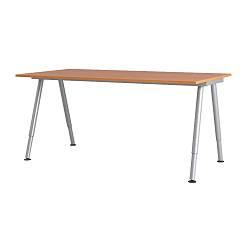
Stephen Brown, one of my favorite fellow academics whom I adore and admire personally and love to hate professionally, wrote an October 2001 Harvard Business Review article "Torment Your Customers ( They'll Love It)." I find this whole thing appalling, although I begrudgingly admit he has a point. Right now I'm cursing my friend (if I can be so presumptuous), as I am sure someone at IKEA as become an disciple of Stephen...particularly the bit about "Retromarketing eschews the modern marketing proposition by deliberately holding back supplies. You want it? Can't have it. Try again later, pal."
I have been trying to buy a 63" GALANT table from IKEA for almost two months. I know, I know, Yoda says, "There is no try. There is only do." Well, there's definitely lots of doo-doo involved, but not the young Jedi Knight type.
All I want is a nice long table for my home office. Currently, things get a little crazed when I'm working on an article, as I don't have nearly enough room to be spreading stuff out in an organized manner. My fancy desk/armoire thingy is very cool, but the iMac is in it, along with printer, etc. No real room.
Tables aren't cheap, but the little 63" number at IKEA is only $169.00. With shipping, it'll be $300+, but that's OK. I love IKEA products for their simplicity and, ironically, the table is still cheaper than any comparable table I can find locally.
On August 19th, I ordered the table on-line. I received an e-mail that stated, "Your order information appears below. Due to a high volume of orders, we will contact you to confirm your order with the details about your delivery and total cost within 5 - 7 business days." OK, this is not exactly Amazon type interaction here...but I'll wait.
Then, exactly 7 business days after I placed my order, I received a note from Barb at IKEA:
Hello Gary, [excuse me, isn't this a bit familiar Barb?]Hmmm - yea Barb, that's a bit inconvenient. Actually, I am not a happy lad.
Thank you for your recent e-Shop order.
Unfortunately, as of 8/30/05 13:42:00 the following items are out of stock: Galant frame 63"
Since we are unable to complete your order as it was submitted, your e-Shop order has been cancelled. For information on how to place a backorder, please contact Home Shopping directly at (800) 434-4532. A Sales Advisor in this department will be more than happy to assist you.
We apologize for any inconvenience, and we thank you for visiting IKEA online.
Best Regards,
BARB
IKEA e-Shop Sales
Today, thirty-nine days later, I'm trying to rewrite an article at home and I'm thinking, "Get over yourself. How about calling IKEA to get that table?"
One ringy-dingy, two ringy dingy... OK, I'm in to the phone system. This isn't getting any easier, I've got a perky Scandinavian sounding young person telling me to push this button or that button. I think it was a guy, but he/she was so damn perky, he/she is kind of generic...no worries...interactive voice response (IVR) systems don't have a gender anyway. (Note to people who insist on making their customers play number puzzle games in their IVR system - I have a damn wireless phone without a Borg Bluetooth headset, so please let up on the thumb calisthenics...)
Anyway, I somehow got lost enough to be placed in the clueless people queue, waiting for a customer service representative...for twenty minutes!! This is definitely not going well...
I finally get a very nice customer service lady on the phone. I ask her if my order number from August 19th, with all my data in it, would expedite our time together. She says it definitely would help. I read it off and - of course - it's not in her system! OK, I think there's a conspiracy.
So, nice lady asks me what I would like to order (thank goodness she didn't take all my data first). I tell her about the 63" GALANT table.
Pause...
"I'm sorry, I can't order that for you. You must call the business group to order that. They don't work weekends, so you'll have to call back on Monday."
AAGGGHHHH!!!
I respond, "Wait. Seriously. There is only one number on the IKEA page and the GALANT stuff comes up with with everything else. Are you telling me you can't sell it to me?"
Nice lady says, "No, I cannot sell it to you. There are options I don't know about. You'll need a specialist."
Exasperated, I ask nice lady, "Well, is there a specific number I can call to get a hold of these people on Monday? I've been holding for twenty minutes. I'd hate to have to do that again on Monday."
Nice lady states, "No, there's just one number. The phone system will ask you whom you want to speak with. Is there anything else I can help you with?"
I think I said, "No, thank you. Have a nice day." But I may have said something really snarky, like "Apparently not."
Will I call on Monday? Stephen Brown would think so. Unfortunately, I think he's right... I still need a table and I've become completely insane about a 63" GALANT table from IKEA...
Friday, October 07, 2005
Automatic Renewals: Everyone's Doing It (and a Bit About Two-Part Tariff Pricing)
OK, I can't believe this!!
Downloading my Citibank records, I found a charge for "RoadRunner Club Renewal." Apparently, much like GQ magazine, RoadRunnerSports.com has taken the initiative to provide me a "service," automatically renewing my RoadRunnerSports Club membership. The membership provides faster shipping, a "free" return of shoes and 5% discount.
Here are three possible reasons people need to be renewed automatically:
Note that two-part tariff pricing, where you have an up front fixed price coupled with a per unit price, is very effective in the right situations. For RoadRunnerSports, it's really a way to get people who are buying a lot or expect to buy a lot to make a commitment to buy at least $500 worth of stuff (assuming they do the math). Industrial companies to this all the time. So do wireless phone companies when they charge a larger monthly fee up front and then give you more free minutes and lower per minute charges. Amazon does this when they charge you $3.00 to ship the first book and $0.99 for each additional book. This creates an incentive for the customer to buy more than the one thing they came for by effectively lowering the price of other items they might not have bought at a higher price.
The problem with the folks at RoadRunnerSports is they took a good idea (two-part pricing via the RoadRunner Club) and messed it up by automatically renewing membership.
Lesson: If you don't know why something works, you'll probably screw it up by trying to make more money off of it.
Downloading my Citibank records, I found a charge for "RoadRunner Club Renewal." Apparently, much like GQ magazine, RoadRunnerSports.com has taken the initiative to provide me a "service," automatically renewing my RoadRunnerSports Club membership. The membership provides faster shipping, a "free" return of shoes and 5% discount.
Here are three possible reasons people need to be renewed automatically:
1) The deal is very good if you order enough stuff to pay for the membership fee right off. If you are a real runner (which those of you who have seen me in person know is not the case at this point in my life), it's probably a decent deal. However, if you want to optimize your spending, it would make more sense to lump as many purchases together at a time and then be "inactive" until you need the discount/fast service again.
2) The economics for someone like me don't really make sense unless I buy a lot of stuff. Last year it was a heart monitor, about three pairs of shoes and some other things people find interesting if Mark Wahlberg (aka Marky Mark) was buying them. However, if you do the math, you'd have to buy a whole lot. The annual fee is $24.99 and this entitles you to 5% off your purchases, which means you'd have to buy $499.50 ($24.99/5%) to break even. For $38.98, you can save 10% on every order, but then your breakeven is $779.60. No wonder they had to automatically renew me!!
3) It's not really a club. Why do amateur marketers insist on calling everything a club? Who's stupid enough to think a two-part tariff pricing scheme is a club? It's a purely economic relationship.
Note that two-part tariff pricing, where you have an up front fixed price coupled with a per unit price, is very effective in the right situations. For RoadRunnerSports, it's really a way to get people who are buying a lot or expect to buy a lot to make a commitment to buy at least $500 worth of stuff (assuming they do the math). Industrial companies to this all the time. So do wireless phone companies when they charge a larger monthly fee up front and then give you more free minutes and lower per minute charges. Amazon does this when they charge you $3.00 to ship the first book and $0.99 for each additional book. This creates an incentive for the customer to buy more than the one thing they came for by effectively lowering the price of other items they might not have bought at a higher price.
The problem with the folks at RoadRunnerSports is they took a good idea (two-part pricing via the RoadRunner Club) and messed it up by automatically renewing membership.
Lesson: If you don't know why something works, you'll probably screw it up by trying to make more money off of it.
Wednesday, October 05, 2005
How Us vs. Them Comparisons Blind Us
One line of discussion in last night's marketing strategy class was "cultural differences" among countries.
As expected, I completely went off on the ignorance of managers in this week's case who, when developing their strategy for the Italian market, focused on the notion that Italians are more fashion conscious and less educated than Scandinavians. (Note: I appreciate these case-embedded examples so we can talk about them in class. The examples are actually much less offensive than the lazy thinking I've encountered in business and academic organizations.)
My point is that stereotypes are not segments. Nor are they markets. In fact, the Italian market is very heterogeneous overall. There are poor people, rich people, fat people, skinny people, and even people with chickenpox (there's an Oscar Mayer Wiener jingle in there somewhere).
At the end of my rant on how stereotypes - even good ones - can blind us as people and marketers, a participant asked, "Are you saying that there are no cultural differences?"
Hmmmm...a very good question, indeed.
Yes, there are cultural differences among people all over the world and even (and here's my point) among Americans. Even among Tampa residents. Even among those of use within USF. Even among those of us in the class last night.
It's always amazing to me when my Canadian, European or Asian friends comment about "Americans." Why do we drive Hummers? Why are we all so fat? Why are we all so selfish? Well, that's not quite right. Certainly it is a uniquely American fact that the Ford F-Series has been the best selling vehicle in the US for the last 10 years and outsold the best selling car, the Toyota Camry, 2:1 in 2003. However, if you assume all Americans are truck-driving fatties, how do you explain the success of the Toyota Prius, the Mini Cooper, the Scion? Well, Americans may be different than other cultures and our economic and tax policies may lead to very strange consumer behaviors, but we are all, in the end, unique. That's true of any country or any culture or ANYTHING.
The key to effective segmentation, targeting and positioning is delineating among buying segments based on attributes which we can create a distinct competitive advantage versus our competitors. What can we, as a collection of managers working for an entity, offer a given segment that no other group can? Those opportunities are not visible among stereotypes of consumers, countries or cultures. Opportunities to create a MEANINGFULLY differentiated value proposition rest on our true understanding of the target segment. Stereotypes almost never offer that verstehen.
Do cultural differences matter? Well, sure, in many ways. But opportunities to create superior value internationally do not exist in the stereotypes or aggregate statistical differences between Us and Them; opportunities for superior value creation exist in the true understanding (verstehen) of meaningful differences among people within a given market, country, culture.
As expected, I completely went off on the ignorance of managers in this week's case who, when developing their strategy for the Italian market, focused on the notion that Italians are more fashion conscious and less educated than Scandinavians. (Note: I appreciate these case-embedded examples so we can talk about them in class. The examples are actually much less offensive than the lazy thinking I've encountered in business and academic organizations.)
My point is that stereotypes are not segments. Nor are they markets. In fact, the Italian market is very heterogeneous overall. There are poor people, rich people, fat people, skinny people, and even people with chickenpox (there's an Oscar Mayer Wiener jingle in there somewhere).
At the end of my rant on how stereotypes - even good ones - can blind us as people and marketers, a participant asked, "Are you saying that there are no cultural differences?"
Hmmmm...a very good question, indeed.
Yes, there are cultural differences among people all over the world and even (and here's my point) among Americans. Even among Tampa residents. Even among those of use within USF. Even among those of us in the class last night.
It's always amazing to me when my Canadian, European or Asian friends comment about "Americans." Why do we drive Hummers? Why are we all so fat? Why are we all so selfish? Well, that's not quite right. Certainly it is a uniquely American fact that the Ford F-Series has been the best selling vehicle in the US for the last 10 years and outsold the best selling car, the Toyota Camry, 2:1 in 2003. However, if you assume all Americans are truck-driving fatties, how do you explain the success of the Toyota Prius, the Mini Cooper, the Scion? Well, Americans may be different than other cultures and our economic and tax policies may lead to very strange consumer behaviors, but we are all, in the end, unique. That's true of any country or any culture or ANYTHING.
The key to effective segmentation, targeting and positioning is delineating among buying segments based on attributes which we can create a distinct competitive advantage versus our competitors. What can we, as a collection of managers working for an entity, offer a given segment that no other group can? Those opportunities are not visible among stereotypes of consumers, countries or cultures. Opportunities to create a MEANINGFULLY differentiated value proposition rest on our true understanding of the target segment. Stereotypes almost never offer that verstehen.
Do cultural differences matter? Well, sure, in many ways. But opportunities to create superior value internationally do not exist in the stereotypes or aggregate statistical differences between Us and Them; opportunities for superior value creation exist in the true understanding (verstehen) of meaningful differences among people within a given market, country, culture.
Thursday, September 15, 2005
Give 'em a taste of the good stuff: simplehuman sure-fit trash liners
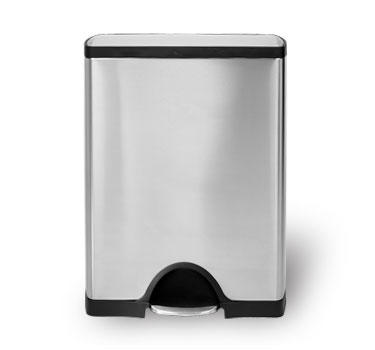
I just finished buying some simplehuman sure-fit trash bags for my simplehuman trash cans at simplehuman.com. What a cool, market-oriented company. Three points to this posting: (1) I gush about how simplehuman does great design based on the needs of their markets, (2) I highlight how simplehuman promoted their products better during my second purchase experience by giving me a "taste" of how good their custom "sure-fit" trash bags are and letting me know where the heck I can buy them easily, and (3) bottom line takeaways about consumers, risk and pricing.
First, what is simplehuman? Well, it is a brand of simply awesome trash cans. Yes, that's right, simply awesome trash cans. Their awesomenss is all about design and simplehuman people actually understand how people use trash and made a whole damn business out of it. (They are now diversifying into other design-impoverished household products.) I found out about simplehuman from some magazine article - which I'm really not in the mood to find right now, so if you'd like the here is the "about" section of their website explaining their design philosophy for trash cans:
http://www.simplehuman.com/about/trash-can-features.html
They also have a blog...
http://simplehuman.typepad.com/blog/simplehuman_humans/index.html
I bought the 38 liter rectangular kitchen can within the last year because I HATE the smell of kitchen garbage more than almost anything. Living with only Milton the Cat and spending most of my waking hours at the university, the kitchen trash can get pretty rank over a week of intermittent use. Simplehuman's awesome design does a great job of maintaining a seal on the can so I don't have to smell anything I threw out five days ago. Given the awesomeness of this product, I recently bought a smaller 20 liter teardrop version for Milton the Cat's bathroom. Now Milton the Cat's refuse doesn't clog up the toilet in his bathroom.
This second purchase has created an annuity of purchases for simplehuman, which I explained to them in the comments section of their order form when I bought really awesome sure-fit bags this morning on simplehuman.com:
They asked:
"How did you hear about simplehuman.com:"My Response:
"The web address on the free bags included with the 20L teardrop can I bought from Williams-Sonoma. Oddly, I had bought my 38L can a year ago at Restoration Hardware - but didn't realize (a) how much better the sure-fit bags were than "regular" bags or (b) how to get sure fit bags. Including a free "starter set" of bags in the 20L can made me realize how much better they are than regular bags and where to get the darned things;-) "It is interesting that my morning started by replacing the simplehuman trash bag in Milton the Cat's bathroom. I saw the website address and finally realized that I could buy the bags at simplehuman.com. (I had looked for the bags before at some retail stores and could not find them.)
The Bottom Lines:
1) By including some sample bags (20) with my second purchase, simplehuman overcame my reluctance to spend twice as much on their trash bags than the generic Hefty bags I buy at the grocery store. Once I used the sample bags they included, the superior value of their bag-can design was clear. Using the custom-made sure-fit bags makes the overall design more integrated and, thus, the seal more tight. That is one of the three most important features of "trash consumption." (Second is that the bag be sturdy, i.e., no leakage in the can or on the way to the dumpster. Third is easy to handle, particularly some type of tying mechanism for the trip to the dumpster - so I don't hurl from the smell.)
2) The promotion of simplehuman.com was as brilliant as it was obvious. Where better to let the customer know where to get more bags than to BOLDLY print the website on the container of sample sure-fit bags?
Saturday, July 23, 2005
Just because you can, doesn't mean you should
Here's a note I sent to Bank of America today. It speaks for itself:
I just spent 3:30 minutes on the phone activating my new (physical) credit card. I am deeply offended that you forced me to listen to over 2 minutes of advertising for a service that is unnecessary and, quite honestly, borders on a scam. [I am referring to the "credit protection" service banks offer for a couple of bucks a month.]
I was only annoyed, but I can't believe you would take money from people who TRUST you, and then turn around and sell them a service which they legally can get for free. [https://www.annualcreditreport.com/cra/index.jsp]
Isn't your customers' trust worth more than another dollar of margin a month? If your customers don't trust you - you'll lose a lot more than $1/month.
However, the bottom line for me is that I find it deeply offensive that I have to listen as a captive person on the phone to a slimy advertisement when all I wanted to do was activate my credit card.
Just because you can play a commercial, doesn't mean you should. Next time, I will cancel the card instead of putting up with your inane advertisements.
Appreciate my business instead of insulting me or I will take my business to a company that does appreciate it.
Saturday, February 12, 2005
Automatic renewals: When your magazine sucks, trap the customer
In yesterday's mail, I received a rather strident note from GQ magaine. The note came with an invoice - stated as the 3rd one they've sent - and threatening to send me to "outside collection" and asking me "For the small amount you owe, is it worth it to delay?"
I was kind of embarrassed and figured I should write the check immediately. I could have also paid my invoice on-line, but I don't typically do that for a simple reason: too many magazines are running a scam where they take your credit card number and - as a convenience - automatically bill you every time your subscription runs out. Hence, I am writing out a manual check when I realize, "Wait a minute! I've been thinking lately that GQ magazine kind of sucks. It's huge, but has little about fashion, style or upkeep anymore. Instead, the thing is chock full of advertising and articles on the most bizzare innane topics - like that damn mob family that has a reality TV show. I made a mental note that I wasn't going to renew my subscription."
I then realize I may not have actually renewed my GQ subscription - but the bastards are threatening to send me to a collection agency for not paying a subscription I didn't renew. After looking through my financial notes, I see no record of renewal, which is a bit odd for me not to have recorded.
I call GQ's customer service number, and they inform me that they did, in fact, renew my subscription "as a service" to me!! Unbeleivable!! I said one word, "unacceptable." The lady, keeping her composure, which isn't a total surprise, since I'm probably the tenth call like this she's received today, tells me she's canceled my subscription (which again, is odd, since I didn't renew it myself). I feel kind of weird about how cool she's being, particularly stating that "March will be your last issue and, if you receive another invoice, just ignore it and throw it out." (I think that means one is on the way. But still, she was really cool about it.) Overcome with her niceness, I explained that "I know you probably don't work for GQ, so I don't mean to be so curt to you. Thank you so much for your help and have a great day." Of course, this was insane - mostly on my part. Ms. Wonderful manages to not miss a beat and state, "Are you interested in golf? We have a special deal today on Golf Digest for only $12." Stunned by her opportunism, I could only mutter, "No thank you. Have a nice day. Goodbye."
***
Do you think GQ was really renewing my subscription as a service to me? I think not. I think it is a service to them. I figure some bonehead at GQ figured out that the best way to keep renewal rates up - and thus, subscribers - was to not let them leave. I might be wrong, but I doubt it. I find it very hard to believe that GQ (or their publisher, more accurately) did a market study and found subscribers beside themselves with regret for not having renewed their GQ subscription. All those customers just dying to get their hands on the latest story about the Gotti family and screaming for GQ to solve their problems with something really creative - like an automatic renewal service. (I love that they call this a service. The Orwellian double-speak is admirable.) No, this is a service to the publishers who have figured out that automatically renewing the subscriptions of indifferent subscribers is more profitable - since a large percentage probably don't dispute it - than trying to keep customers by addressing the editorial content. Of course, eventually advertisers will figure out that the response to ads in a magazine run this way is lower than advertising in a magazine people actually want - and the whole thing will backfire. Until then, the bonehead who thought this up gets a promotion and will fire the poor sap in charge of solicting advertisers a couple of years from now.
Hmmm...a good 45 minutes and a voided check later, all I can think is, "Thanks so much for your service. I can't imagine what I'd do without it. OK, I can, I'd be showered and shaved already instead of sitting in front of the computer ranting about your service..."
I was kind of embarrassed and figured I should write the check immediately. I could have also paid my invoice on-line, but I don't typically do that for a simple reason: too many magazines are running a scam where they take your credit card number and - as a convenience - automatically bill you every time your subscription runs out. Hence, I am writing out a manual check when I realize, "Wait a minute! I've been thinking lately that GQ magazine kind of sucks. It's huge, but has little about fashion, style or upkeep anymore. Instead, the thing is chock full of advertising and articles on the most bizzare innane topics - like that damn mob family that has a reality TV show. I made a mental note that I wasn't going to renew my subscription."
I then realize I may not have actually renewed my GQ subscription - but the bastards are threatening to send me to a collection agency for not paying a subscription I didn't renew. After looking through my financial notes, I see no record of renewal, which is a bit odd for me not to have recorded.
I call GQ's customer service number, and they inform me that they did, in fact, renew my subscription "as a service" to me!! Unbeleivable!! I said one word, "unacceptable." The lady, keeping her composure, which isn't a total surprise, since I'm probably the tenth call like this she's received today, tells me she's canceled my subscription (which again, is odd, since I didn't renew it myself). I feel kind of weird about how cool she's being, particularly stating that "March will be your last issue and, if you receive another invoice, just ignore it and throw it out." (I think that means one is on the way. But still, she was really cool about it.) Overcome with her niceness, I explained that "I know you probably don't work for GQ, so I don't mean to be so curt to you. Thank you so much for your help and have a great day." Of course, this was insane - mostly on my part. Ms. Wonderful manages to not miss a beat and state, "Are you interested in golf? We have a special deal today on Golf Digest for only $12." Stunned by her opportunism, I could only mutter, "No thank you. Have a nice day. Goodbye."
***
Do you think GQ was really renewing my subscription as a service to me? I think not. I think it is a service to them. I figure some bonehead at GQ figured out that the best way to keep renewal rates up - and thus, subscribers - was to not let them leave. I might be wrong, but I doubt it. I find it very hard to believe that GQ (or their publisher, more accurately) did a market study and found subscribers beside themselves with regret for not having renewed their GQ subscription. All those customers just dying to get their hands on the latest story about the Gotti family and screaming for GQ to solve their problems with something really creative - like an automatic renewal service. (I love that they call this a service. The Orwellian double-speak is admirable.) No, this is a service to the publishers who have figured out that automatically renewing the subscriptions of indifferent subscribers is more profitable - since a large percentage probably don't dispute it - than trying to keep customers by addressing the editorial content. Of course, eventually advertisers will figure out that the response to ads in a magazine run this way is lower than advertising in a magazine people actually want - and the whole thing will backfire. Until then, the bonehead who thought this up gets a promotion and will fire the poor sap in charge of solicting advertisers a couple of years from now.
Hmmm...a good 45 minutes and a voided check later, all I can think is, "Thanks so much for your service. I can't imagine what I'd do without it. OK, I can, I'd be showered and shaved already instead of sitting in front of the computer ranting about your service..."
Subscribe to:
Posts (Atom)


